Most people get in and out of a car without a second thought. But for someone with limited mobility, recovering from surgery, arthritis or supporting an ageing parent, that simple movement can be one of the most difficult parts of the day.
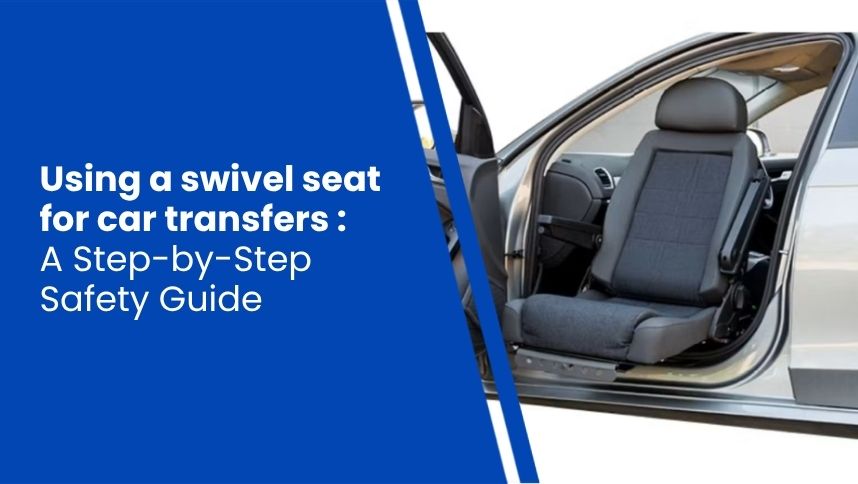
Enter the swivel seat for car transfers – and that’s where it can really make a difference. The swivel seat allows for a more fluid movement pattern making it easier and more stable for people to get in and out of the vehicle without having to twist and turn their body.
But a swivel seat alone isn’t enough. Equally important to picking one is using it safely and correctly. Minor errors during transfers can reduce comfort and create unnecessary hazards. Understanding the right process helps ensure every transfer feels more secure and controlled.
Step-by-Step Safety Guide for Using a Swivel Seat for Car Transfers
Following a structured approach helps make each transfer easier and safer.
Step 1: Position the Vehicle Correctly
Safety begins long before anyone touches a seat. Park the vehicle on:
Avoid parking on steep slopes if possible, as uneven positioning could affect balance during transfers.
Before you begin, turn off the engine and set the parking brake.
These little precautions create a more stable environment to move around in.
Step 2: Open the door
A partly opened car door constrains space and can lead to awkward body positioning. Open the door wide so that the person has:
Step 3: Rotate the Swivel Seat Outward
The purpose of a swivel seat is to reduce twisting.
Rotate the seat toward the vehicle door so the person can sit facing outward instead of attempting to lower themselves sideways into the car.
At this stage, ensure:
The seat locks securely into position
The rotation mechanism is stable
Nothing obstructs movement
Never assume the seat has locked automatically. Confirm it before proceeding.
Step 4: Sit First, Then Adjust Position
A frequent error in transfers is attempting to sit up and move your legs simultaneously. Rather:
Lower yourself slowly onto the swivel seat, with your feet flat on the floor. Prompt the person to:
As you are now seated, take a moment to get comfortable before you move on to the next step. It’s a balanced approach that allows for balance.
Step 5: Rotate Body and Legs as One
Then sit down and look into the interior of the vehicle.
Do not twist the upper body independently, but make the entire body go as a unit. The usual sequence looks smoother like this:
Twisting the spine while the hips remain stationary often creates discomfort, especially for individuals with arthritis or post-surgical restrictions.
Step 6: Secure the Seat Position
Before driving, make sure the seat returns to its correct locked position. Check:
The seat faces forward
Rotation is fully locked
Stability feels firm
Even a slight seat movement while driving can affect comfort and confidence. Taking a few extra seconds for verification matters.
Step 7: Fasten the Seat Belt Properly
Positioning is often overlooked but the last step is the most important. Fasten your seatbelts:
It should be snug but not uncomfortable.
Practical Safety Tips for Caregivers
When helping a person with a transfer, always remember the safety of the person and your own safety.
There are a few habits that can really make a difference:
Notify of each step prior to movement.
Move slowly and predictably.
Encourage participation as often as possible
Do not pull the arms or shoulders
Remain in a good posture
Caregiver injuries often happen in a gradual rather than sudden fashion. Months of awkward lifting, again and again, can lead to long-term strain.
Proper transfer techniques protect all involved.
Beyond Safety: The Emotional Side of Independent Transfers
Mobility talks tend to be about physical movement, but emotional comfort is important as well.
Many people get frustrated when normal activities become difficult. Sometimes reliance on others for basic tasks can impact confidence and independence.
Getting into a car is easy and the consequences are not just convenience. People may be more likely to:
See family and friends
Schedule appointments on your own
Engage in social activities
Get out of the house more comfortably
Often a smoother transfer process restores confidence in ways you don’t see right away.
It’s more than just getting in a car. “We want to keep freedom and make life less constricting.