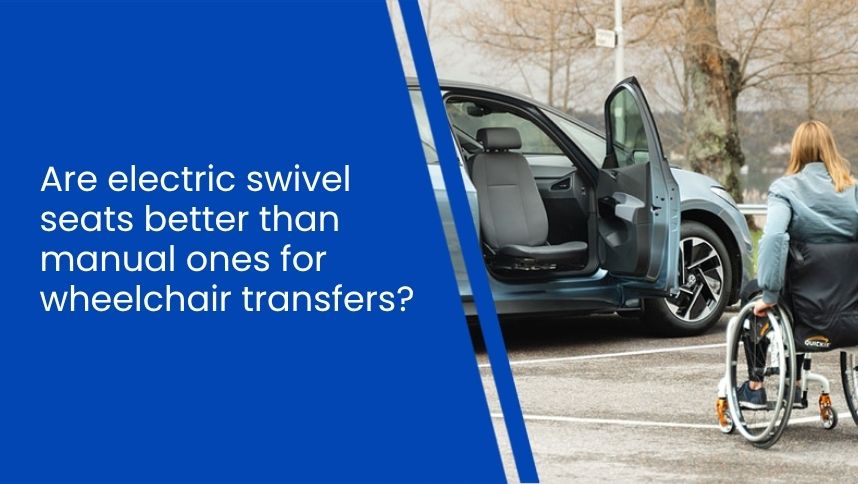
Wheelchair transfers are often described as a technical process. It involves moving from one surface to another, maintaining support, minimizing strain, and ensuring safety. But for those who experience mobility challenges every day, transfers are not just about getting from one space to another. They are repeated actions that build daily independence.
Transfers from wheelchair to car, chair to bed and other surfaces several times a day. When a transfer becomes difficult, every routine activity starts to require more effort. That’s why assistive seating solutions, especially swivel seats that make movement easier, are becoming increasingly important.
Then among the options available two systems are often taken into consideration such as electric swivel seats and manual swivel seats.
The question many users and caregivers ask is straightforward: Are electric swivel seats better than manual ones for wheelchair transfers?
Understanding How Swivel Seats Help With Wheelchair Transfers
The traditional vehicle seat is fixed in position. This is a big problem for wheelchair users. The user frequently needs to twist and pivot, or lift themselves at awkward angles.
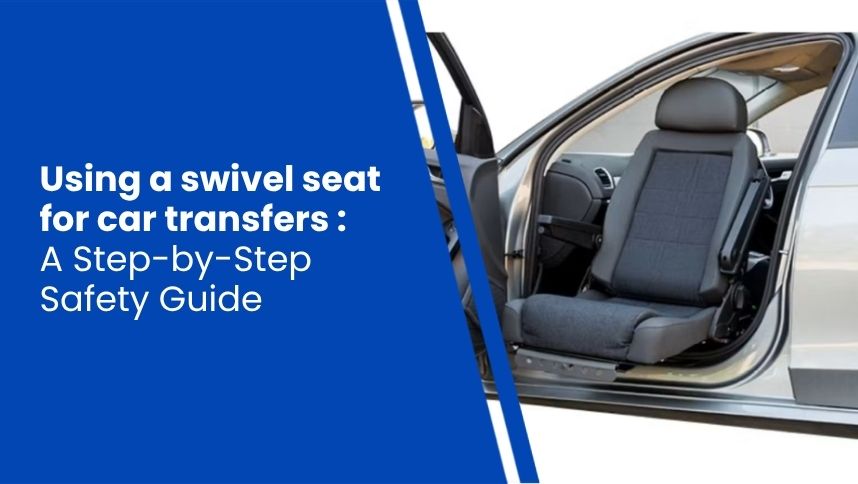
Swivel seats address this issue by turning outward, bringing the seat nearer to the user and lessening the transfer effort.
Some systems can also slide outwards or lower their height, further decreasing physical strain. The two major categories include:
Manual swivel seats
These require some physical effort to turn or move the seat. The user or caregiver manually unlocks the seat and moves it into position.
Electric swivel seats
These use powered mechanisms to spin, extend and sometimes raise and lower the seat with buttons or controls.
The difference might seem limited to automation at first glance, but in real-world use the impact could be much greater.
Why Manual Swivel Seats Still Remain Relevant
Technology can make us think that newer is automatically better. Many users still find manual systems to be effective.
Manual swivel seats are appreciated because they are simple and practical. Advantages are:
Reduced initial cost
Fewer electronic components
Reduced maintenance complexity
Some cases easier to install
No dependence on electrical systems for reliable operation
If you have moderate upper body strength and good balance, you may find the manual operation not too demanding.
For example, someone recovering from a temporary mobility condition or someone with mild movement limitations may be comfortable with a manual swivel.
There’s also a psychological element to consider. Some users want the ability to physically control the position of the seat, rather than have it powered.
Sometimes simplicity can be empowering.
Where Electric Swivel Seats Create Noticeable Difference
Electric swivel seats are designed to reduce physical effort as much as possible.
Instead of manually twisting, pulling, or pushing a seat into position, the system handles movement automatically.
This matters more than many people initially realize.
Wheelchair transfers already require attention to balance, posture, and positioning. Adding additional effort through manual seat adjustments can increase fatigue, particularly over multiple transfers each day.
Electric systems may provide:
Automated seat rotation
Forward or outward movement
Adjustable height positioning
Reduced physical strain
Improved transfer consistency
For individuals with conditions involving muscle weakness, chronic pain, neurological disorders, or limited arm mobility, these features can significantly improve daily comfort.
Imagine someone living with arthritis, spinal cord injuries, or age-related mobility decline. Repeatedly operating manual mechanisms may seem manageable once or twice, but the cumulative effect over weeks and years becomes meaningful.
Electric assistance reduces that burden. The goal is not merely convenience.
The goal is preserving energy for the rest of life.
Independence Matters More Than Features
Discussions around assistive technology can sometimes get very caught up in specs and functionality.
But users typically want something simpler:
Can I do this myself?
Emotional importance is a higher priority than physical mobility.
When people are able to get into a vehicle with minimal help, everyday tasks are easier:
Electric swivel seats are often more independent because they require less physical effort to operate.
Manual systems may still need the assistance of another person for users with reduced strength or coordination.
That difference is as much about confidence as it is about mobility.
The capacity to achieve a transfer independently often re-establishes a sense of control that mobility limitations may otherwise take away.
Cost is Usually the Largest Concern
There is one area in which manual systems have a distinct advantage. Price.
Electric swivel seats typically include:
More expensive purchase prices
Powered parts
Installation requirements
Possible maintenance costs Manual seats are generally less expensive.
For families already struggling with the costs of medical expenses, rehab costs, mobility equipment and vehicle modifications, pricing becomes a matter of practicality, not preference.
But a focus on up-front cost may miss long-term considerations. Some good questions to ask include:
Will physical abilities change with time?
Will caregiver demands increase?
Will it create tension if used often?