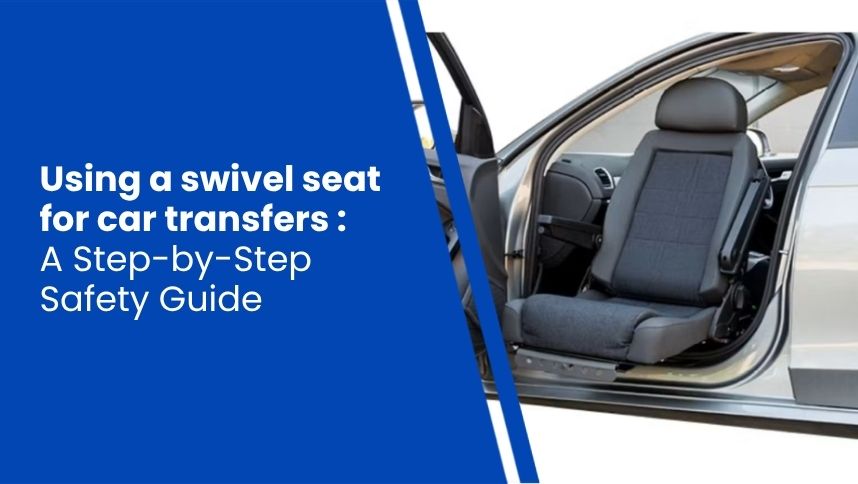
The swivel bucket seats first became famous in the 1970s when they came as an OEM option on the American muscle cars like the Chevy Monte Carlo and Oldsmobile Cutlass. Over the last few decades, the swivel bucket seats have been moved into two distinctive categories, i.e., the swivel seat and the bucket seat.
The swivel seats are designed for comfort and accessibility as they allow easier entry & exit from vehicles. The bucket seats, on the other hand, have become a performance option on cars, allowing for a contoured, body-hugging design that holds the driver & passengers in place for spirited driving.
However, for those who own a classic car, neither the modern swivel seat nor the modern bucket seat fits the aesthetic of the vehicle. As a result, many look for options for retrofitting swivel bucket seats for their car.
Let’s have a look at why swivel bucket seats are making a comeback and how one can retrofit them into their car.
Why Swivel Bucket Seats Are Making a Comeback
General Motors introduced the swivel bucket seats in the 1970s as an option, and it soon became a bit. They were a take on the bucket seats formerly offered by GM and allowed for the seats to rotate 90⁰ towards the door for easier access.
Since the beginning of the 21st century, there has been a significant rise in the resto-mod culture, with many from the current generation restoring and modifying cars from the mid-to-late 1900s. While GM offered the swivel bucket seats, they match the vintage aesthetics of the American muscle cars from 60s to 90s.
Anyone who’s restoring or modifying the Fords, Chevrolets, Dodge, Plymouth, and Cadillacs from that era should consider retrofitting swivel bucket seats into the vehicle as they provide comfort as well as add to the style. This has resulted in the swivel bucket seats making a comeback.
Different Types of Swivel Bucket Seats
The swivel bucket seats offered in the 70s primarily varied depending on the automation as well as the rotation angle. Other factors differentiating them included the padding & how it contoured the body, the inclusion of a headrest built into the seat, and the material used as upholstery.
The manual swivel required a lever to be operated by exerting physical strength, whereas a power swivel seat had an electric motor controlling the rotation.
Some swivel seat rotates upto 90⁰, making for the easiest entry and exit, whereas the other option was partial/tilt swivel designs, which may rotate to only 60⁰, allowing for the legs to just move out of the vehicle sills.
Sourcing the Right Swivel Bucket Seats for Your Classic Car
While swivel bucket seats are still in production, it is difficult to find period-correct options for your vehicle. One option can be to get customised swivel bucket seats, but that can cost thousands of dollars for custom designing, fabrication, and installation.
The best options for finding period-correct swivel bucket seats are salvage yards & specialty retailers. If the seats aren’t in great shape, they can be sent to upholstery shops for restoration. If neither of these options works out, the custom upholstery shops are the way to go.
It might also be possible to just source the swivel base kit compatible with the OEM vehicle seats from that era, but aspects like functionality and safety need to be considered.
Assessing Your Car’s Compatibility Before Retrofitting Swivel Bucket Seats
Various factors need to be considered to assess your vehicle’s compatibility for retrofitting a swivel seat. These factors include
- Checking floor pan dimensions to determine whether it allows fitting a swivel seat
- Tunnel clearance so that the height doesn’t interfere with operation
- Door opening width requirements for the swivel motion
- Whether the vehicle is a body-on-frame or unibody chassis determines the installation needs
- Whether the OEM seatbelts work with the swivel bucket seats
Tools and Materials Required for Retrofitting Swivel Bucket Seats
While it is preferred to get professional consultation and installation of the swivel bucket seats, the restoration and modification is taken on as a passion project, with many doing the same in their garage. The tools and materials required for retrofitting swivel bucket seats are
- Drill
- Torque wrench
- Socket set
- Measuring tape
- Swivel seat brackets
- Swivel plates
- Mounting bolts
- Safety gear
- Wires and multimeter for automated swivel seats
Steps For Retrofitting Swivel Bucket Seats
Removing the Original Seats Safely and Cleanly
- Disconnecting wiring for heated seats and airbag sensors. (Preferably disconnect the battery as well)
- Remove factory bolts without stripping the floor pan
- Take the OEM seat out of the car
Installing the Swivel Base Plate
- Depending on the availability for the vehicle, choose the universal or vehicle-specific swivel adapter plates
- Welding or bolting on the plate, depending on the requirement of the car’s structure and the swivel base plate option
- Reinforcing the floor pan if needed for structural integrity
Mounting and Aligning the Swivel Bucket Seats
- Check and ensure proper seat height, fore-aft positioning, and tilt angle
- Check seatbelt compatibility
- Torque specs and double-checking all fasteners
Safety Checks, Legal Considerations, and Compliance
- Ensure crash load testing is met and use of certified hardware
- Ensure regional vehicle modification laws are met
- Ensure airbag system compatibility