
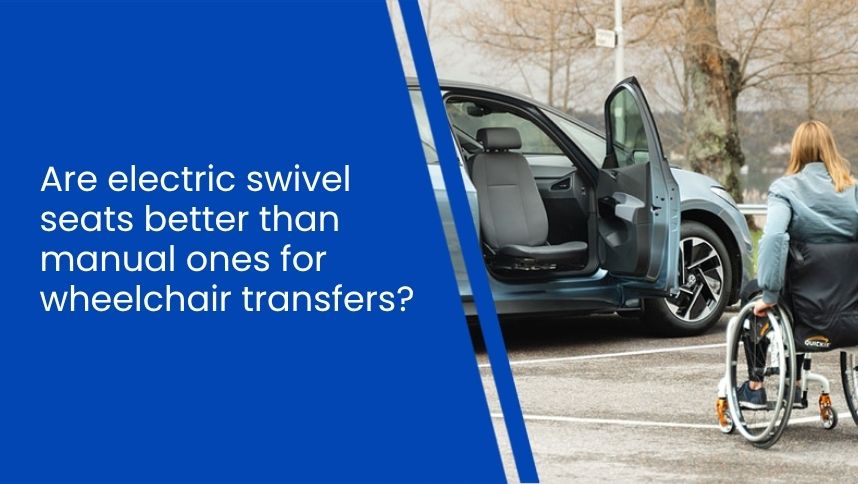
Are electric swivel seats better than manual ones for wheelchair…
Electric Wheelchair For Stroke Recovery in India
A stroke changes life very quickly – not just for the patient, but for the entire family around them.
Table of Contents
ToggleOne day someone is walking independently, going to the market, sitting with relatives, handling daily routines. Then suddenly, even moving from the bedroom to the dining table may require support. In many Indian homes, this becomes an emotional adjustment more than a medical one.
And honestly, one of the hardest parts after stroke recovery is not always the treatment itself. It’s mobility.
The hesitation to walk. The fear of falling. The exhaustion after a few steps. The frustration of depending on others for basic movement.
This is exactly where an electric wheelchair starts becoming less of a “medical device” and more of a practical everyday support system.
Not as a replacement for recovery.
But as a tool that helps recovery continue safely.
Why Mobility Becomes So Important After Stroke
Most stroke survivors deal with some level of weakness, fatigue, poor coordination, or balance problems during recovery.
For some people, the right side of the body becomes weaker. For others, it may affect the left side. Even when movement slowly improves through physiotherapy, energy levels usually remain low for months.
This creates a common problem in Indian households.
Families want the person to stay active. Doctors recommend therapy and movement. But physically moving around becomes tiring and risky.
Many stroke survivors stop attending social gatherings, avoid walking long distances, or stay mostly confined to one room simply because movement feels stressful.
Over time, this affects confidence too.
That’s why rehabilitation experts often focus heavily on safe mobility during recovery.
Because recovery slows down when movement stops.
How Electric Wheelchair Helps During Stroke Recovery
There’s a misunderstanding in India that using a motorised wheelchair means “giving up” on walking.
That’s usually not true.
In many cases, it actually helps people stay more active overall.
1. Reduces Fall Risk at Home
Falls are extremely common after strokes.
Weakness in the legs, slower reflexes, dizziness, or poor balance can make walking unsafe – especially inside Indian homes where floors may be slippery, bathrooms are compact, and furniture spacing is tight.
An electric wheelchair provides stable seated mobility without putting stress on weakened muscles.
For families, this reduces constant fear.
For patients, it removes the anxiety of “What if I fall?”
That psychological relief matters more than people realise.
2. Saves Energy for Therapy
One thing many caregivers notice after stroke treatment is fatigue.
Even small activities can leave the person exhausted.
Walking from the parking lot into a hospital. Standing in queues. Moving through long corridors. Attending physiotherapy sessions.
All of this consumes energy.
Using an electric wheelchair helps conserve strength for the exercises and rehabilitation that actually improve recovery.
Instead of spending all their energy simply reaching therapy, survivors can focus on participating properly during therapy.
That difference becomes important over time.
3. Brings Back Everyday Independence
This is probably the biggest emotional shift.
Being able to move independently again – even in small ways – changes mood dramatically.
Something as simple as :
- Going to the balcony independently
- Joining family meals
- Moving to another room without calling someone
- Sitting with guests
- Visiting the temple downstairs
- Going outside for fresh air
These moments sound small from the outside.
But after a stroke, they become huge confidence boosters.
Many families notice emotional improvement once mobility improves.
People become more social again. Less withdrawn. Less frustrated.
4. Makes Hospital Visits Easier
Anyone who has visited Indian hospitals regularly knows how exhausting they can be.
Long walking distances. Crowded waiting areas. Parking far from entrances. Elevators. Ramps.
For stroke survivors, this becomes physically draining very quickly.
A foldable electric wheelchair makes these trips much smoother for both the patient and caregiver.
Instead of struggling physically before even meeting the doctor, the person arrives more relaxed and comfortable.
Features That Matter Most in Indian Homes
Not every electric wheelchair suits Indian living conditions.
This is where many families make mistakes – buying imported-looking models online without thinking about practical daily use.
Compact Design
Most Indian homes are not built like hospitals.
Doorways are narrower. Furniture spacing is tighter. Bathrooms are compact.
A wheelchair with good turning radius becomes extremely important indoors.
Foldable Frame
Many families need to :
- Store the chair in apartments
- Carry it in a car boot
- Take it for hospital appointments
- Shift it between floors or homes
A foldable electric wheelchair makes daily life easier.
Especially in urban India where space matters.
Easy Controls
After a stroke, one side of the body may remain stronger than the other.
Simple joystick controls help users operate the wheelchair comfortably using their stronger hand.
Some models also include attendant controls, which caregivers appreciate.
Comfortable Seating
Stroke recovery sometimes involves longer sitting periods.
Good cushioning, posture support, armrests, and footrests become very important for comfort and circulation.
Poor seating usually creates body pain very quickly.
Reliable Battery Backup
Nobody wants a wheelchair dying midway during a hospital visit.
A dependable battery range is especially useful in Indian cities where traffic, waiting time, and travel distances can be unpredictable.
When Families Usually Start Considering One
In reality, most Indian families begin looking at electric wheelchairs during situations like:
- After discharge from hospital
- During ongoing physiotherapy
- When walking causes heavy fatigue
- When falls become frequent
- When caregivers struggle physically
- During repeated hospital visits
- When confidence starts dropping
And honestly, many people wish they had considered mobility support earlier.
Because delaying support often creates unnecessary stress for both patient and family.
Electric Wheelchairs Are Not “Giving Up”
This needs to be said clearly.
Using mobility support does not mean recovery has stopped.
In fact, the opposite is often true.
Good mobility support helps stroke survivors :
- Stay socially active
- Continue therapy consistently
- Move safely
- Protect energy levels
- Avoid injuries
- Maintain mental wellbeing
The goal is not dependency.
The goal is safer participation in everyday life while recovery continues.
Why More Indian Families Are Choosing Motorised Mobility Support
Awareness around stroke recovery is slowly changing in India.
Families now understand that recovery is not only about medicines or physiotherapy sessions.
It’s also about preserving dignity.
When someone can move independently again – even partially – it changes the atmosphere inside the home too.
Less stress. Less lifting strain on caregivers. Less emotional frustration.
More confidence. More movement. More participation.
That’s why electric wheelchairs are becoming increasingly common across Indian homes, hospitals, rehabilitation centres, and senior care environments.
Final Thoughts
Stroke recovery is rarely a straight line.
Some days feel encouraging. Some feel slow. Some feel emotionally exhausting.
But safe mobility support can make that journey easier.
A well-chosen electric wheelchair helps stroke survivors stay connected to daily life while protecting their energy, safety, and confidence during rehabilitation.
And sometimes, regaining the ability to simply move freely again – even around the house – becomes the first real step toward feeling normal again.
Brands like JCBL Mobility are helping Indian families access practical mobility solutions designed for real home environments, everyday comfort, and long-term support during recovery.
PEOPLE ALSO ASK
Is an electric wheelchair good for stroke patients?
Yes, an electric wheelchair can be very helpful for stroke survivors, especially those dealing with weakness, balance issues, or fatigue after treatment. It allows safer movement inside and outside the home while reducing physical strain. Many families in India use motorised wheelchairs during rehabilitation to help patients stay active, attend physiotherapy sessions, and maintain independence during recovery.
When should a stroke patient start using a wheelchair?
A stroke patient may require a wheelchair when walking becomes unsafe, exhausting, or physically difficult. Doctors or physiotherapists usually recommend mobility support after hospital discharge if balance, coordination, or muscle strength are still affected. Using a wheelchair early can reduce fall risk and make daily movement safer during recovery.
Does using an electric wheelchair slow down stroke recovery?
No. An electric wheelchair does not stop recovery. In many cases, it actually supports rehabilitation by helping patients conserve energy for therapy and exercises. It also reduces the physical exhaustion caused by long walking distances, hospital visits, or daily household movement.
Which type of wheelchair is best for stroke recovery in India?
The best wheelchair depends on the patient’s mobility level, home layout, and daily routine. Foldable electric wheelchairs with joystick controls, comfortable seating, compact turning radius, and good battery backup are usually preferred in Indian homes. Lightweight models are also easier for caregivers to transport during hospital visits.
Can stroke patients operate an electric wheelchair themselves?
Yes, many stroke survivors can independently use an electric wheelchair if they have sufficient control in one hand. Most motorised wheelchairs come with easy joystick controls that are simple to learn. Some models also offer attendant control options for caregivers.
How does an electric wheelchair help during stroke rehabilitation?
An electric wheelchair supports stroke rehabilitation by reducing fatigue, preventing falls, and improving safe movement. It helps patients continue social interaction, attend physiotherapy regularly, and participate in everyday activities without overexertion. This often improves both physical recovery and emotional wellbeing.
Are foldable electric wheelchairs suitable for Indian homes?
Yes, foldable electric wheelchairs are highly practical for Indian homes and apartments where space may be limited. They are easier to store, transport in cars, and carry for hospital appointments. Compact folding models are especially useful for urban families.
Must-Read For You
Blog Categories
Explore Better Solutions
Tell us your requirement and we’ll guide you with options that fit your daily needs.
Trending Articles
Blog Categories
Explore Better Solutions
Tell us your requirement and we’ll guide you with options that fit your daily needs.
Trending Articles