For many older adults, getting in and out of a car is becoming more and more challenging. It doesn’t change overnight very often. Stiff joints, lack of flexibility, discomfort in the back, balance issues, or recovering from surgeries can turn a simple movement into one that requires effort and caution. Things that used to take seconds can feel like an obstacle course.
That’s when a rotating car seat for seniors goes from being about convenience to being about restoring ease to a very ordinary part of life.
The funny thing is that most people think initially that these seats are only for people who have severe mobility limitations. The truth is many users just want to get out of pain day to day and stay independent longer.
Why car entry becomes difficult long before mobility feels “serious” People only seek support with mobility when they are clearly in pain when moving. But car access is usually frustrating much earlier.
When you get into a car, imagine the sequence:
You approach the vehicle, ease yourself into the seat, bend your legs, turn your hips, pull your legs inside, and reposition your body. It sounds easy because most do it without thinking.
But several physical movements happen at once.
That down motion can be uncomfortable for an older adult with knee stiffness. The problem for someone with hip sensitivity is the twisting action. Back pain is another dimension altogether as rotational movements can frequently cause discomfort.
Many caregivers notice a pattern: parents or grandparents begin taking longer near the car door. They hesitate before sitting. They ask for support more often.
Small moments usually signal bigger shifts.
This is why solutions that reduce strain early can matter more than waiting for mobility to decline further.
How a rotating car seat for elderly users changes the movement itself
The traditional seats require people to lower themselves and turn their body at the same time. A car seat that rotates for senior users reverses that order.
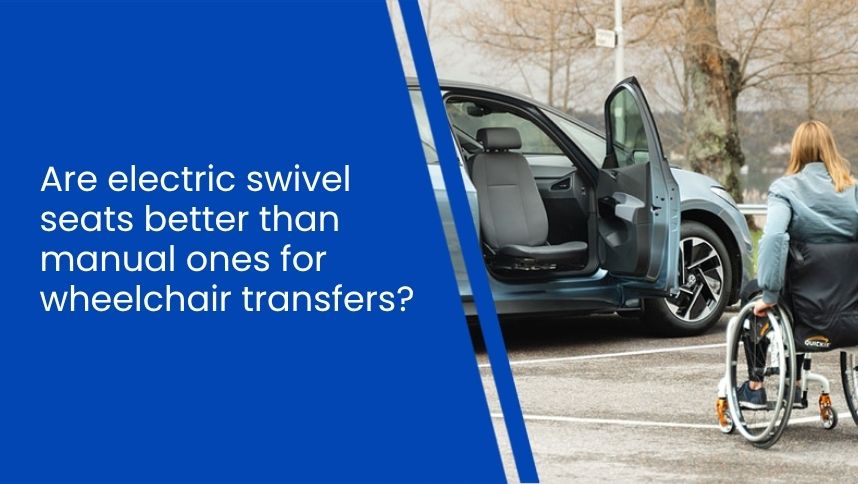
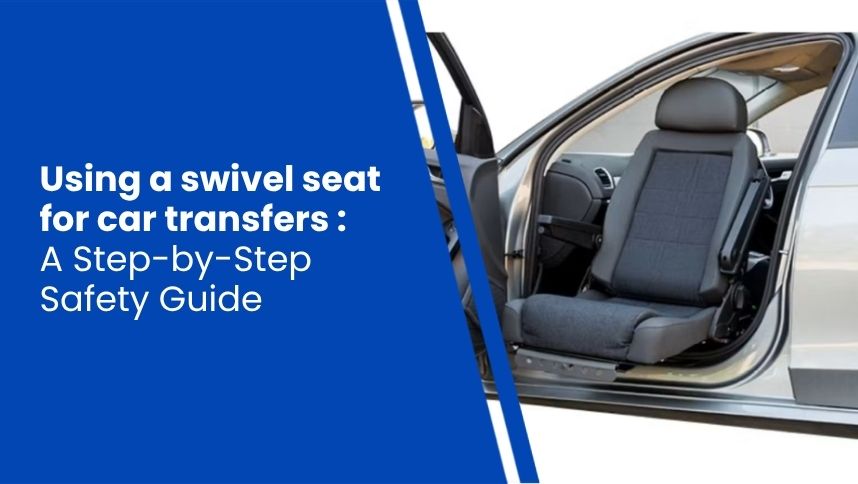
When the rotating seat or swivel seat is considered, you don’t have to contort yourself into the vehicle, the seat pivots out toward the door opening. The person is sitting first, facing outward more naturally. The seat converts to the right travel position when you are comfortably seated.
The movement becomes easier:
That may sound like a small change, but it can make a surprisingly big difference.
The part caregivers usually notice first
Physical help is a big part of care-giving and often becomes routine.
Walking with arm around. Providing assistance on stairs. Help someone to sit down comfortably.
Helping someone into a vehicle can be one of those unnoticed duties.
At first it looks easy. But there is also the constant need for caregivers to twist, lift and support body weight.
The truth that many families realize later is that support systems are not only for the person that is receiving help. They reduce the physical effort on everyone involved.
For instance, if you have recently looked into solutions for comfortable travel assistance for older adults, this provides a logical connection to topics like mobility support for everyday activities or vehicle accessibility adaptations for seniors.
Choosing the right rotating car seat solution for senior comfort
Not all rotating systems or swivel seat systems are made for the same purpose, and this is where many people get confused.
Some options are JCBL Mobility’s Orbit Roll, a swivel seat that converts into a fully functional wheelchair, or orbit lift, a swivel seat that rotates out and then lowers itself to the ground to make it easier for the user to access, and orbit, a swivel seat that only rotates outwards. Others include more integrated vehicle adaptations.
The right choice is usually more than product specs – it’s about everyday reality. A few practical questions help to narrow things down:
Is knee pain the main problem?
Is there loss of hip mobility?
Is the person requiring assistance from a caregiver?
Transfers are happening more than once a day?
Is this a temporary recovery, such as after surgery?
Someone who is recovering from a procedure may need help for a few months.
If someone is having progressive mobility changes they may need a more permanent set up. There is no one size fits all answer as the challenge itself is different from person to person.