
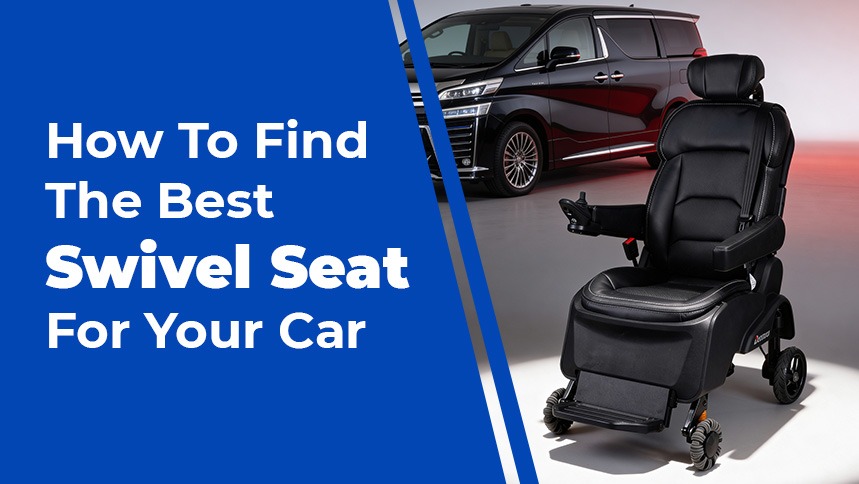
For most people, getting into a car is automatic. You open the door, sit, and go.
But if you’ve ever watched someone with limited mobility try to do the same thing, you realise how complicated that simple action can become.
Twisting the body, lifting legs, adjusting balance – it’s not just uncomfortable, it can be painful or even unsafe.
This is exactly where swivel seats come in.
Not as a luxury upgrade, but as a practical solution that removes one of the most frustrating daily barriers.
The problem is, once you start looking for one, the options get confusing fast.
Manual, electric, lowering mechanisms, compatibility issues – it’s not always clear what actually matters.
The confusing part? The market throws too many options at you, and most of them sound similar until you actually try to understand what they do.
So instead of listing features, let’s talk about how people actually choose the right one – and where they usually go wrong.
First, Be Clear About One Thing : Who Is This For?
This sounds obvious, but it’s where most decisions get slightly off.
A swivel seat isn’t just for wheelchair users. In fact, a lot of users fall into a grey zone:
- Someone recovering from knee or hip surgery
- An elderly parent who can still walk but struggles with bending
- A person with back issues who avoids twisting movements
- Someone who gets fatigued just getting in and out repeatedly
The need isn’t always dramatic. It’s often subtle—but consistent.
And that consistency is what makes the right choice important.
What Swivel Seats Actually Solves
Forget the technical explanation for a moment.
The real problem is this : Getting into a car forces your body to twist, lift, and balance at the same time.
That combination is where things go wrong.
A swivel seat changes just one part of that equation – but it changes it enough :
- You sit facing outside, like sitting on a chair
- No twisting while lowering yourself
- No awkward leg movement inside the footwell
- Once seated, the rotation happens smoothly
It’s a small mechanical change, but practically, it removes the most uncomfortable part of the process.
Where Most People Get Confused While Choosing
The mistake is thinking : “Which is the best swivel seat available?”
That’s not the right question.
The right question is : “Which one will I not struggle with after using it every day?”
Because what feels manageable once can feel exhausting when repeated 4 – 5 times daily.
Manual Swivel Seat : Simple, But Not Effortless
This is usually the starting point.
It rotates. It helps. It’s definitely better than a fixed seat.
But here’s the honest part – you still need to use your hands and some strength to move it.
For someone who :
- Still has decent upper body strength
- Doesn’t mind a bit of effort
…it works fine.
But for someone already struggling, this can slowly become another task to manage.
Electronic Swivel Seat : Where It Starts Feeling Easy
The first time you use an electronic swivel seat, you notice the difference immediately.
You sit. Press a button. The seat does the work.
No adjustment. No effort.
For elderly users especially, this is usually the point where the experience shifts from “manageable” to “comfortable.”
It’s not about luxury – it’s about removing one more dependency.
Swivel + Lowering Seat : When Height Becomes the Real Problem
This comes up more often than people expect.
Cars today – especially SUVs – sit higher. And that height becomes the biggest barrier.
Even if someone can rotate into the seat, getting up to that level is a challenge.
That’s where a lowering function changes everything.
The seat comes down to you. You don’t climb into the car.
For wheelchair users or anyone with serious mobility restrictions, this isn’t optional – it’s the difference between using the car or avoiding it.
Wheelchair Swivel Systems : When Transfer Itself Is the Problem
There are cases where even moving from wheelchair to car seat is difficult.
That’s where this system makes sense.
Instead of transferring the person, you transfer the seat itself.
It sounds simple, but it removes one of the most physically demanding parts of mobility – for both the user and the caregiver.
Things People Realise Only After Installation
This is where real-world experience matters.
Space Around the Car Matters More Than You Think
In Indian cities, you’re rarely parked in a wide, open space.
If your door can’t open fully, or the seat extends too far out, daily use becomes frustrating.
This isn’t a product issue – it’s a planning issue.
Car Type Changes Everything
A hatchback behaves very differently from an SUV.
Seat height, door angle, and entry space all affect how useful the swivel seat will be.
That’s why “universal fit” is rarely practical.
Frequency Changes Your Decision
If this is for occasional use, you can compromise.
If it’s daily, small inconveniences become big ones very quickly.
That’s usually when people wish they had chosen a more effortless option from the start.
Why an Assessment Isn’t Just a Formality
A good assessment doesn’t feel like a sales process.
It feels like someone asking the right questions :
- Can you stand without support?
- Do you feel stable while turning?
- How much assistance do you currently need?
- Where do you usually park your car?
These questions sound basic, but they decide everything.
At JCBL Mobility, this step helps narrow down options based on how you actually move – not how a product is marketed.
And that usually prevents expensive mistakes.
The India Reality : Why Imported Solutions Don’t Always Fit
This is something people realise late.
A product designed for wide roads and structured parking doesn’t always translate well here.
- Tight residential parking
- Mixed road conditions
- Limited servicing in smaller cities
So the focus shifts from “advanced features” to : Will this work every day without creating new problems?
That’s where locally adapted solutions make more sense.
Final Thoughts
When you get this right, you don’t think about it anymore.
You just get into the car – without planning every movement, without bracing yourself, without needing help every time.
That’s the real benchmark.
Not how advanced the seat is. Not how many features it has.
Just this simple question : Does it make something difficult feel easy again?
If the answer is yes, you’ve chosen well.
PEOPLE ALSO ASK
1. Is a swivel seat difficult to use daily?
Not really. Once installed, it becomes part of your routine. The key is choosing one that matches your physical comfort level.
2. Should I go for manual or electronic?
If you’re already facing strain or fatigue, electronics usually make more sense long-term.
3. Can I install a swivel seat in any car?
Not always. Compatibility depends on the vehicle design, so checking before installation is important.
4. Is it useful for elderly people who can still walk?
Yes, especially if they struggle with bending, twisting, or maintaining balance while entering the car.
5. Does it require regular maintenance?
Basic maintenance is needed, especially for electronic systems. Choosing a provider with service support helps.