There’s a moment about mobility that people don’t talk about much. It is not the moment someone becomes diagnosed, grows old, or starts to need help. It’s a whole lot smaller than that. You’ll find it in parking lots, outside homes, or in the driveways of hospitals. It is the silence of stopping before getting into a car.
Most people don’t think much about getting into a vehicle. One hand on the door, quickly turn, sit down and get on with your day. For someone with reduced mobility, arthritis, back pain, muscle weakness or recovering from surgery, that simple movement may become frustratingly complicated. Sometimes awkward contortions are involved. Sometimes you need help. And sometimes it makes people avoid travelling altogether.
This is where an electric swivel car seat begins to shift the conversation. Not because it is another comfort accessory or a technological upgrade, but because it quietly addresses something larger than transportation itself: independence.
Why an Electric Swivel Car Seat Is Becoming More Relevant Than Ever Mobility discussions have traditionally focused on movement outside the vehicle. Wheelchairs, ramps, walking aids, and accessibility infrastructure receive attention because their value is obvious. The transition into and out of a car often remains overlooked.
But consider everyday life.
A retired individual wants to visit friends without worrying about painful transfers. A person recovering from knee replacement surgery needs temporary support while regaining strength. A caregiver is lifting and assisting a family member several times each day and beginning to feel physical strain themselves.
None of these situations are rare. They are ordinary realities that unfold quietly in thousands of households.
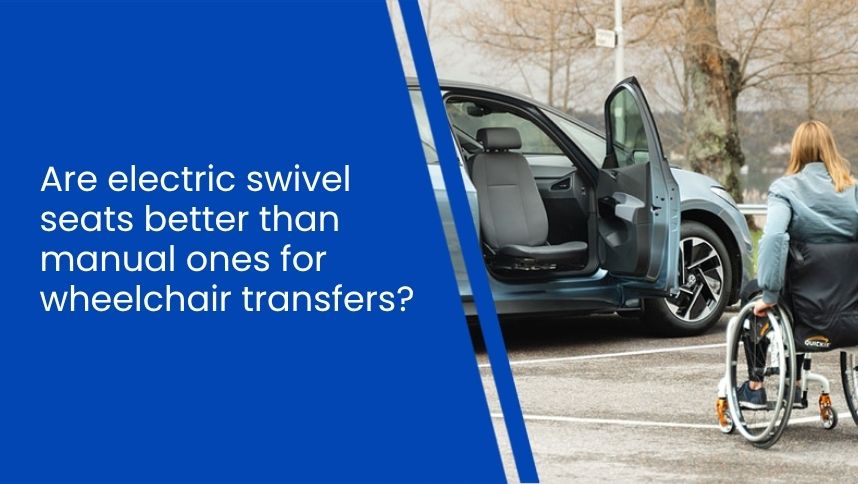
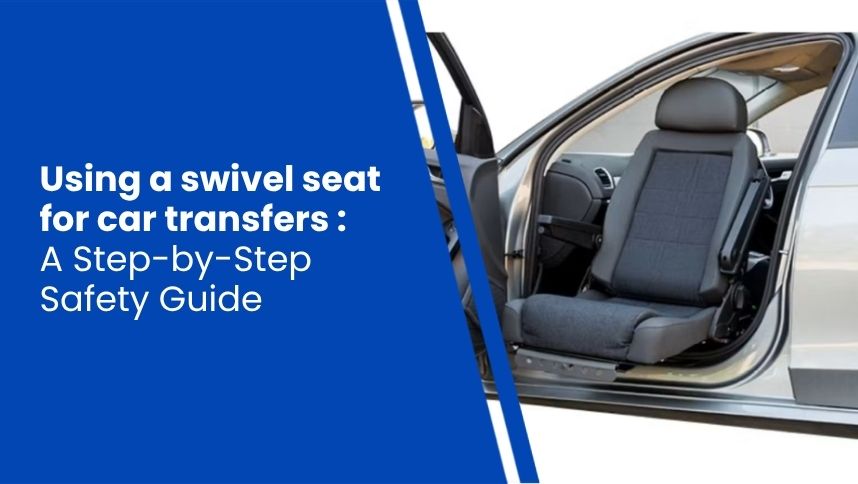
An electric swivel car seat changes the mechanics of entering a vehicle. Instead of requiring the body to twist into a confined space, the seat rotates outward and extends to create easier access. The user sits down from a more natural angle, and the seat gradually returns into position.
On paper, that sounds like a mechanical function. In practice, it changes routines.
It reduces hesitation before outings. It removes some dependence on physical assistance. It can turn travel back into something ordinary instead of something that needs planning.
Interestingly, technology becomes most valuable when people stop noticing it. There is also a subtle emotional aspect that often gets missed.
Many individuals do not struggle with accepting physical limitations as much as they struggle with losing control over decisions. Asking for help entering a vehicle can feel uncomfortable, especially for people who have spent decades being self-reliant.
The issue is rarely pride alone. It is familiarity.
People are accustomed to moving through life independently. Small dependencies can gradually create larger psychological barriers.
An electric swivel mechanism cannot solve every challenge related to mobility, but it can remove one repeated friction point from everyday life.
That matters more than it initially appears.
Looking Beyond Ageing: Who Actually Benefits?
Mobility products are often associated exclusively with seniors. That assumption misses a much wider picture.
Consider people in situations such as:
Injury recovery
Chronic back conditions
Neurological disorders
Less lower-body strength
Joint pain
Post-surgical rehabilitation
Care-giving scenarios involving children or adults with disabilities Physically, life doesn’t often go in a straight line.
Someone can go from absolute independence to requiring temporary assistance and back again in a matter of months.
The notion that mobility support is the province of one group or another is becoming more and more passé.
Adaptive design succeeds because it accepts variation. Bodies move.
Things change.
Abilities are daily changing.
Good design understands movement as dynamic, not static.
There’s another interesting change in how people think of these investments.
Years ago, adaptive technologies often looked like things people put off buying until they really had to.
A proactive solution is of increasing interest.
And that wider mind set is more and more in keeping with an electric swivel car seat.
Not because someone lost his independence. Because they want to keep it.
The Future of Independence May Look Smaller Than We Expect
When people think about future mobility, they often think about big innovations. Self-driving cars in urban environments.
Artificial Intelligence in the Management of Transportation Systems. Improved robotics for motion.
Such things may happen. They are already happening.
But not all meaningful independences are the result of dramatic transformations. Sometimes it’s easier to get into a car.
Sometimes it gets through with one less request for help.
Sometimes it simply means agreeing to plans without first doing the math of physical difficulty. Technology is often noted for what it provides us.
Maybe a more interesting question is, what does it take away? An electric swivel car seat eliminates friction.
It eliminates doubt.
It removes some of the physical constraints that gradually shape decisions from day to day.
And maybe that’s where independence has always resided—not in big pronouncements, but in the ordinary moments that still felt possible.
Discussions about accessible transportation, user-centered design and the evolving needs of passengers are becoming increasingly important for brands and organizations working in mobility solutions. The future feels less about creating extraordinary experiences, and more about protecting ordinary ones.
Ordinary moments suddenly don’t feel ordinary anymore when they become difficult.